
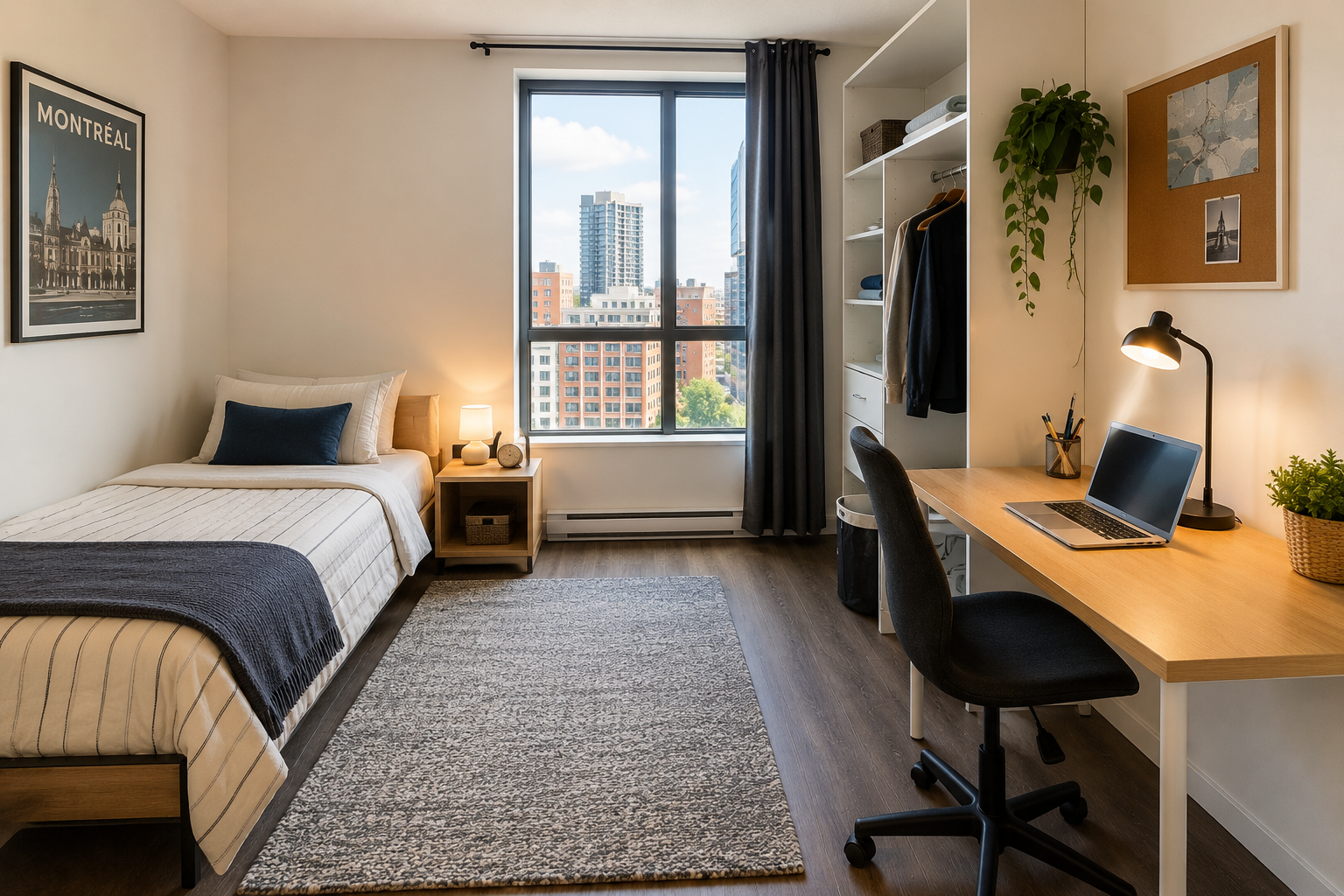
A furnished student room can look like an easy way to earn higher rent. Put in a bed, desk, chair, lamp, maybe include Wi-Fi, and the room becomes more appealing to students who do not want the hassle of buying furniture.
But the real question is not only: should you furnish your rental property?
The better question is:
Will the furnished room still make sense after setup costs, repairs, utilities, high turnover, summer vacancy, cleaning, and your own time?
For a property owner in Montreal, furnished rooms can work well near a university, college, public transit, and student neighbourhoods. They can attract tenants who want convenience, especially international students, first time renters, and students coming to the city for one semester or one school year.
Still, furnished rentals are not passive. They need a plan.
Quick Answer: Are Furnished Rooms Worth It for Student Rentals?
Yes, furnished rooms can be worth it for student rentals if the location is strong, the room is practical, and the numbers work after costs.
They make the most sense when the rental property is close to campus, downtown Montreal, metro stations, grocery stores, and student services. Most students are on a tight budget, but many are willing to pay more for a room that is move in ready and saves them from buying furniture.
A furnished room may command higher rent than an empty room. But higher rent is not the same as higher profit. Furniture, appliances, cleaning, Wi-Fi, repairs, vacancy, and turnover can reduce cash flow.
Why Students Look for Furnished Rooms
Students often look for furnished rooms because they need convenience.
Many students arrive in Montreal without furniture. International students may land with two suitcases. Out-of-town students may not have parents nearby to help with moving. Some students stay for one semester, one summer, or one academic year and do not want to buy a bed, desk, chair, and kitchen items for such a short term.
A furnished student rental removes part of that stress.
A good furnished room gives a student a simple setup:
-
a bed;
-
a desk;
-
a chair;
-
storage;
-
good lighting;
-
Wi-Fi;
-
access to kitchen and bathroom;
-
clear house rules.
For students, this is not about luxury. It is about having a space where they can sleep, study, cook, and start school without spending the first week buying basic furniture.
International student demand matters in Montreal. Statistics Canada reported that, among the municipalities studied, the share of international students living in rented units ranged from 64.7% in Brampton to 91.8% in Montréal. That does not guarantee easy profit for every landlord, but it shows why student housing is a real part of the rental market here.
Furnished Room vs Furnished Apartment: What Landlords Should Understand
A furnished room is not the same product as an entire apartment.
Furnished Room
A furnished room usually means the tenant has a private bedroom but shares other parts of the unit.
Shared areas may include:
-
kitchen;
-
bathroom;
-
living space;
-
laundry;
-
entrance;
-
hallway;
-
storage;
-
balcony;
-
internet connection.
This can work well for students, but it also creates more shared-space issues. One roommate may clean. Another may not. Guests, noise, dishes, food storage, and bathroom schedules can become problems if the rules are vague.
Furnished Apartment
A furnished apartment is usually a full unit. It may be a studio, one-bedroom, or larger apartment with its own kitchen, bathroom, furniture, and appliances.
A furnished apartment usually attracts a different tenant pool: students with a larger budget, couples, digital nomads, corporate rentals, relocating workers, or renters who want privacy for a short term or extended stay.
The room model is cheaper for the student and easier to fill in some areas. The apartment model gives more privacy and may attract tenants with higher budgets.
Pros of Offering Furnished Rooms to Students
The first advantage is appeal. A furnished room photographs better in a listing. An empty room can feel cold. A room with a clean bed, desk, chair, lamp, and storage feels easier to imagine.
Second, furnished rooms reduce the student’s move-in costs. Students do not need to buy furniture, move it through narrow staircases, or sell it at the end of the lease. That convenience can help landlords attract tenants faster.
Third, furnished units can be useful for flexible lease terms. A student staying for one semester, an intern in town for four months, or an exchange student may prefer a furnished room over a long term unfurnished rental.
Fourth, furnished rooms can help with rent-by-room marketing. If the apartment has several rooms, each room can be presented clearly with photos, furniture, size, and access to shared spaces.
Fifth, the landlord may be able to command higher rent. But this should be tested against local listings. Do not guess. Compare furnished rooms and unfurnished rooms in the same neighbourhood, near the same campus or transit line.
Cons and Risks for Landlords
Furnishing a rental property costs money upfront.
At minimum, you may need:
-
bed frame;
-
mattress;
-
desk;
-
chair;
-
lamp;
-
dresser or closet storage;
-
curtains or blinds;
-
mattress protector;
-
basic decor;
-
locks, if appropriate;
-
shared kitchen items, if included.
Furniture also wears out. Student rentals can have heavy use. Chairs break. Mattresses stain. Desk surfaces get damaged. Walls get marked. Lamps disappear. Appliances in shared areas may need more repairs.
High turnover is another issue. Students may leave after one semester, one summer, or one school year. That means more cleaning, more messages, more showings, more move-ins, and more inventory checks.
There is also management risk. A landlord renting rooms is not only managing a property. They are managing shared living conditions. If one tenant causes problems with guests, noise, cleaning, or unpaid rent, it can affect the whole unit.
What Students Expect in a Furnished Room
A furnished student room does not need to be fancy. It needs to be usable.
Most students expect:
-
clean bed and mattress;
-
desk for school work;
-
comfortable chair;
-
stable Wi-Fi;
-
good lighting;
-
enough outlets;
-
closet or dresser;
-
window covering;
-
heating;
-
clear access to bathroom;
-
clear kitchen access;
-
laundry information;
-
house rules;
-
safe door lock;
-
clean common areas.
If the room is small, layout matters. A student should be able to open the door, sit at the desk, store belongings, and move around the bed without feeling trapped.
If Wi-Fi is included, it should be reliable. Many students study online, submit assignments, attend video calls, or work part-time from home.
Realistic Returns: How to Calculate Net Income
The return on a furnished student room should be calculated as net income, not just higher rent.
Use this formula:
Realistic return = room rent − utilities − internet − cleaning − vacancy − repairs − furniture replacement − listing costs − landlord time.
Start with the monthly rent. Then subtract the expenses that come with furnishing and managing the room.
Common costs include:
-
furniture setup;
-
mattress replacement;
-
appliance repairs;
-
Wi-Fi;
-
electricity;
-
heating;
-
water, if relevant;
-
cleaning between tenants;
-
repainting;
-
broken items;
-
vacancy between students;
-
listing fees;
-
your time answering messages.
A furnished room can increase gross income, but it may not improve net profit if the turnover is high or the furniture breaks often.
Example Return Calculation
This is only an example, not a Montreal average.
|
Item |
Amount |
|
Unfurnished room rent |
$650/month |
|
Furnished room rent |
$800/month |
|
Extra rent |
$150/month |
|
Extra rent per year |
$1,800 |
|
Initial furniture setup |
$1,200 |
|
Annual repair/replacement reserve |
$300 |
|
Estimated first-year extra net before time |
$300 |
In this example, the first year mostly pays back the furniture. The return becomes more interesting in year two, if the same furniture lasts and the room does not sit empty.
But if the student leaves after four months, the mattress is damaged, and the room is vacant for July and August, the math changes quickly.
That is why every landlord should compare real local listings before deciding to furnish.
Furniture and Inventory Checklist
Use durable, simple furniture. Do not put sentimental or fragile items in a student rental.
A basic furnished room setup can include:
-
bed frame;
-
mattress;
-
mattress protector;
-
desk;
-
chair;
-
lamp;
-
dresser or closet storage;
-
curtains or blinds;
-
garbage bin;
-
small shelf;
-
Wi-Fi information.
For shared spaces, clarify:
-
kitchen appliances;
-
fridge space;
-
kitchen cabinets;
-
dishes, if included;
-
bathroom storage;
-
laundry access;
-
cleaning supplies;
-
heating controls;
-
guest rules;
-
garbage and recycling.
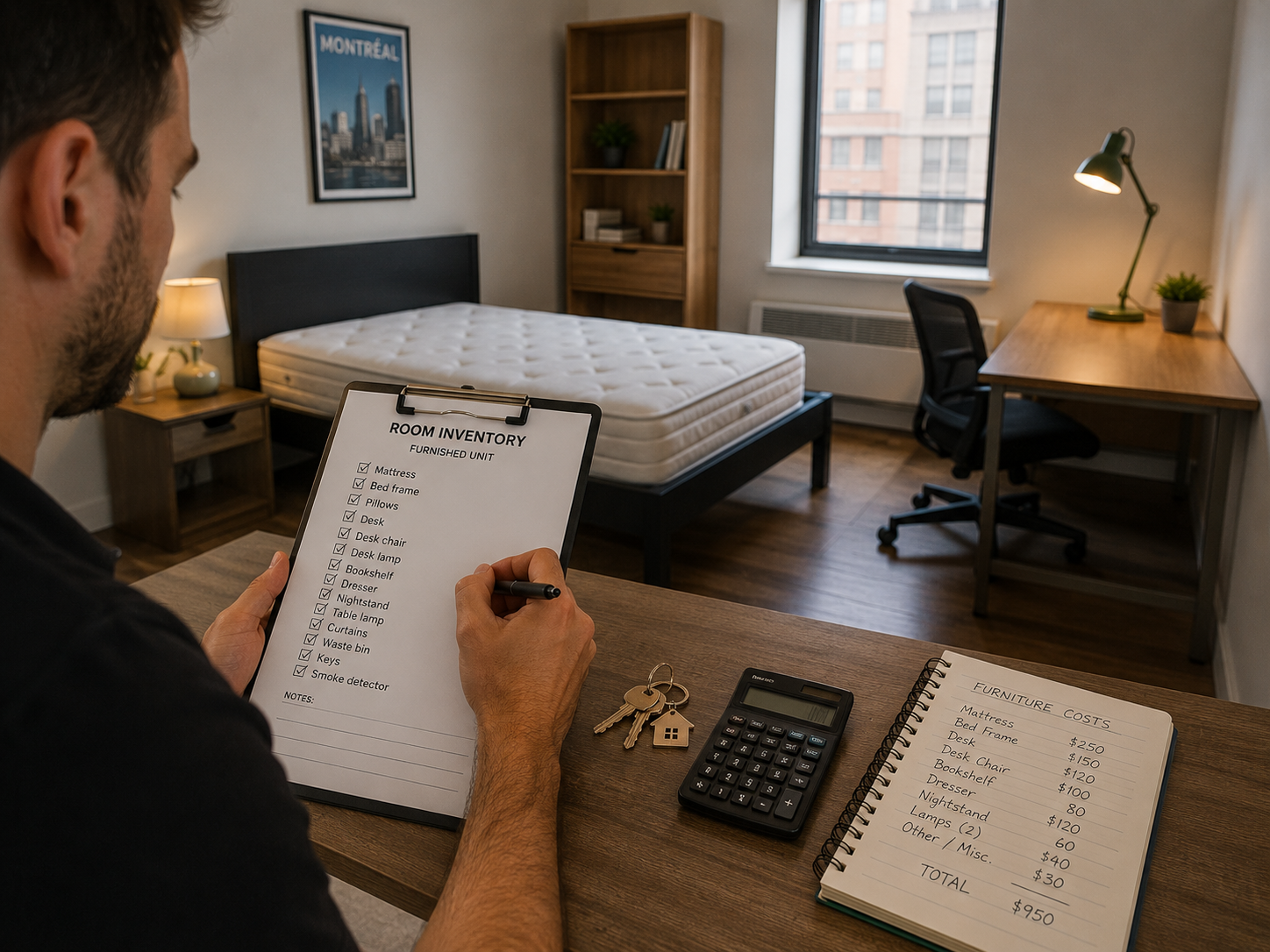
Before move-in, take photos. List every item. Note the condition. Keep the inventory with the lease documents. This protects both the landlord and the tenant.
Security Deposits and Québec Rules
This part is important for Montreal landlords.
In Québec, a landlord cannot require a security deposit, key deposit, damage deposit, furniture deposit, or other extra charge. The Tribunal administratif du logement states that a lessor cannot require more than one month’s rent in advance and cannot charge additional amounts such as a security deposit or key deposit.
So if the room is furnished, do not rely on a deposit to protect the furniture.
Better options are:
-
inventory list;
-
move-in photos;
-
written house rules;
-
clear repair responsibilities;
-
tenant screening;
-
references;
-
proof of ability to pay;
-
tenant insurance where appropriate;
-
regular communication.
The landlord may be allowed to ask for the first month’s rent, but not extra deposits for furniture or possible damage. Éducaloi also explains that, at lease signing, the landlord is only allowed to require the first month’s rent in advance.
When Furnished Rooms Make Sense
Furnished rooms make sense when the property is in the right neighbourhood.
Good signs:
-
close to university or college;
-
close to public transit;
-
safe and practical location;
-
strong student rental demand;
-
room has space for bed and desk;
-
reliable Wi-Fi;
-
shared spaces are easy to manage;
-
landlord is comfortable with student tenants;
-
flexible lease terms are possible;
-
furniture costs are controlled.
They can work especially well near McGill, Concordia, UQAM, Université de Montréal, HEC Montréal, metro stations, and areas where students already rent.
They also make sense when the landlord wants to attract tenants who value convenience: international students, first time renters, interns, exchange students, and people staying short term.
When Furnished Rooms May Not Be Worth It
Furnished rooms may not be worth it if the landlord wants very low involvement.
They may be a poor fit when:
-
the property is far from campus and public transit;
-
the room is too small for a proper study space;
-
shared spaces are hard to control;
-
utilities are included but usage is unpredictable;
-
furniture replacement costs are high;
-
the landlord does not want frequent turnover;
-
local rent premium is small;
-
tenants mostly want long term unfurnished apartments;
-
the landlord does not want to manage roommate issues.
Furnished rentals also have a narrower tenant pool in some areas. Long term renters often prefer unfurnished units because they already have furniture and want their own style.
If the market does not support higher rent, furnishing the room may only add cost and responsibility.
How Montreal-Aparthotel Can Help
Montreal-Aparthotel helps owners list furnished apartments and reach people looking for short- and mid-term stays in Montréal.
If your furnished space is suitable for student renters, the listing should be clear. Students need to know what is private, what is shared, what furniture is included, whether Wi-Fi is available, how close the unit is to campus or public transit, and what lease terms apply.
Owners can submit their furnished apartment here:
https://montreal-aparthotel.com/eng/owners
Students and renters looking for furnished stays in Montreal can browse available options here:
https://montreal-aparthotel.com/eng
Conclusion
Furnished rooms can be a smart option for landlords who understand the student rental market.
They can attract tenants faster, reduce move-in hassle for students, and sometimes bring higher rent. They are especially appealing to international students, exchange students, interns, and renters who do not want to buy furniture for a short stay.
But the return is not automatic.
Furniture costs money. Repairs happen. Students move. Shared spaces need rules. Wi-Fi, utilities, cleaning, and vacancy affect the final income.
A furnished room works best when it is close to student demand, priced realistically, documented clearly, and managed with simple rules. It becomes a problem when the landlord expects more rent without planning for the extra work.
FAQ
Should you furnish your rental property for students?
It can be worth it if the property is near a university, college, metro station, or downtown Montreal. Furnishing works best when students want convenience and the rent premium covers your extra costs.
Do furnished rooms rent for more?
Often, yes. Furnished rooms can command higher rent because they save students time and moving costs. But the exact amount depends on location, furniture quality, Wi-Fi, utilities, and demand.
What should a furnished student room include?
A furnished student room should include a bed, mattress, desk, chair, lamp, storage, good lighting, Wi-Fi access, and clear access to kitchen, bathroom, and laundry.
Is a furnished room the same as a furnished apartment?
No. A furnished room is usually one private room with shared spaces. A furnished apartment is usually an entire apartment with its own kitchen, bathroom, furniture, and appliances.
Can landlords ask for a security deposit for furnished rooms in Québec?
For a standard residential lease, generally no. In Québec, landlords cannot require a security deposit, damage deposit, key deposit, or furniture deposit.
Are international students good tenants?
Many international students can be responsible tenants. Landlords should screen based on proof of funds, references, communication, and ability to pay, not assumptions.
What costs reduce the return on furnished rooms?
Furniture, repairs, mattress replacement, cleaning, utilities, internet, vacancy, listing costs, and landlord time all reduce the real return.
Should landlords include Wi-Fi?
For student housing, Wi-Fi is often expected. If it is included, the landlord should price it into the rent and make sure the connection is reliable.
Are furnished rooms better for short term or long term renting?
They are often better for short term and medium-term stays. Long term tenants may prefer unfurnished apartments because they already have furniture.
What is the biggest risk with furnished student rentals?
The biggest risks are high turnover, furniture damage, roommate conflict, unclear house rules, and assuming higher rent automatically means better profit.
Add new comment