

Renting a furnished apartment in Montreal without a Canadian credit history is manageable, but you need to prepare better than a renter who already has a local credit file.
Most newcomers face the same story: they can pay rent, they may have stable employment, savings, or a job offer, but Canadian landlords cannot see much about them in Equifax or TransUnion yet. That creates rental challenges, especially in a competitive market.
This guide is for newcomers, international students, relocating workers, first time renters in Canada, and anyone trying to rent an apartment before building Canadian credit. The focus is Montréal and Québec, where deposit rules and rental application practices are different from many other provinces.
The quick wins are simple: prepare a strong rental application, show proof of income, organize bank statements, bring references, explain your situation clearly, and avoid offering money that Québec law does not allow a landlord to demand.
Why Canadian Credit History Matters For Renting
Landlords ask for credit history because they want to reduce risk. They want to know whether a tenant is likely to pay rent on time, handle monthly rent responsibly, and respect rental agreements.
A landlord credit check in Montreal may be used to confirm payment habits, debts, collections, and whether the applicant has a stable credit profile. In Québec, the landlord must collect only the personal information needed to evaluate the rental application, and students or newcomers without rental or credit history still need a way to show good payment habits.
For most landlords, the credit check is not about judging your whole life. It is part of the screening process. The problem is that most newcomers have a thin file or no Canadian credit at all. A thin file means there is not enough information in Canada to create a strong credit report.
No credit history rent apartment searches are common for a reason. You are not alone. Many newcomers arrive with no Canadian credit history, no previous landlords in Canada, and no local guarantor. That does not make you a bad tenant. It means you need to prove financial stability another way.
What A Credit Report Reveals
A credit report is a record of how you use credit. In Canada, the main credit bureaus are Equifax and TransUnion. The Financial Consumer Agency of Canada says you can access your credit report online for free from Canada’s two main credit bureaus.
A credit report may show:
-
credit cards;
-
loans;
-
payment history;
-
late payments;
-
collections;
-
credit inquiries;
-
account age;
-
new accounts;
-
available credit;
-
public records linked to credit.
For renting, the most relevant part is payment behaviour. Landlords want to see whether you pay bills and credit accounts on time. Rent payments are not always included automatically in a credit report, which is why some renters use rent reporting services later to build Canadian credit.
A credit report does not show everything. It does not prove that you are quiet, respectful, clean, or easy to communicate with. It is one tool, not the whole picture.
How Credit Scores Affect Your Application
A credit score in Canada is a three digit number. TransUnion describes it as usually ranging from 300 to 900, based on the information in your credit report.
Many landlords prefer applicants with a good credit score. Some private landlords may be comfortable around 650 or higher. A good credit score in Canada is often described as 660 or above, though every landlord or property owner may use a different standard. In competitive buildings, property managers may prefer scores above 680.
Still, scores have limits. A newcomer with no Canadian credit score may be financially stable, employed, and responsible. A local applicant with a good score may still be a poor fit for a specific apartment. Credit score helps, but it should not be the only proof.
If you do not have a Canadian credit score yet, your goal is to make the rest of your application strong enough that the landlord can still feel comfortable.
Prepare Your Application Package
Do not attend viewings empty-handed. Prepare a single PDF with essential documents before viewings, and keep a printed version if you are visiting apartments in person.
Your package can include:
-
one-page cover letter;
-
rental resume;
-
employment letter;
-
proof of income;
-
bank statements;
-
reference letter from previous landlords;
-
employer reference;
-
copy of valid ID;
-
PR card, work permit, study permit, or other relevant status document;
-
proof of savings;
-
contact details for references.
Your cover letter should be short. Explain who you are, why you are moving to Montréal, your employment or study situation, your expected move-in date, and why you would be a responsible tenant.
Your rental resume should fit on one page. Include your name, employment, income range if comfortable, stay dates, number of occupants, whether you have pets, and references.
Strong references can significantly improve your application. If you do not have previous landlords in Canada, use previous landlords from your home country, employer references, university references, or a letter from a close professional contact. Use company letterhead when possible.
Pull Your Credit Report
Even if you think your file is empty, check it. Sometimes newcomers have a small credit file from a phone plan, bank product, or secured credit card.
Request your free Equifax report and free TransUnion report. Canada.ca explains that Canadians can access free online credit reports from Equifax and TransUnion. TransUnion also offers a free Consumer Disclosure, which is a complete account of information on your credit report.
If your file is empty, that is still useful to know. You can tell the landlord honestly: “I am new to Canada, so my Canadian credit file is still limited. Here are my employment documents, bank statements, references, and proof of funds.”
Open A Canadian Bank Account And Show Proof Of Funds
Open a Canadian bank account before viewings if possible. A Canadian bank account helps show that you are set up to pay rent locally.
Ask your bank for an official bank letter confirming your account and available funds, or prepare recent bank statements. Provide bank statements showing three to six months of income if you have it. If you just arrived, show savings instead.
A useful target is to show at least four months of monthly rent savings. This does not mean paying four months in advance. It means proving you have a financial cushion.
For example, if the rent is $1,800 per month, showing savings of $7,200 or more can reassure the landlord that you are not arriving with no backup.
Affordability And Monthly Rent Calculations
Before applying, calculate what rent you can afford.
A simple worksheet:
-
gross monthly income;
-
monthly rent;
-
utilities, if not included;
-
internet;
-
transport;
-
groceries;
-
insurance;
-
debt payments;
-
savings buffer.
Many landlords look at rent as a percentage of income. A common rough guideline is to keep rent around 30% to 35% of gross income, but Montréal realities vary. If your rent is higher than that, your application should show why you can still pay: savings, family support, company housing allowance, scholarship, or a strong employment contract.
Do not apply for apartments far outside your budget. A clear financial situation is more convincing than a weak application for a place you can barely afford.

Alternatives To Canadian Credit
If you have no Canadian credit history, build a proof package with alternatives.
You can provide:
-
employment verification;
-
employment letter;
-
job offer letter;
-
pay stubs;
-
bank statements;
-
proof of savings;
-
scholarship letter;
-
company relocation letter;
-
reference letter from previous landlords;
-
employer reference;
-
proof of on time payments from your home country;
-
proof of paying bills;
-
international credit report, if available;
-
guarantor, if needed.
Private landlords may waive credit checks for applicants who provide enough alternative proof. Property managers and corporate managers may follow stricter landlord requirements, especially in larger rental properties.
Shared accommodations and subletting may sometimes have fewer formal rental requirements, but you still need written terms and caution. Do not assume “less formal” means safe.
Secure A Co Signer Or Guarantor
A guarantor can help if your income is new, your credit file is thin, or your landlord wants extra reassurance.
A guarantor agrees to cover your rent if you default. Guarantors become legally responsible for your rent payments under the agreement they sign. A trusted local family member, close friend, or employer-backed guarantor with good Canadian credit may improve your chances.
Before offering a guarantor:
-
ask the person clearly;
-
explain the responsibility;
-
verify their credit report beforehand;
-
put the guarantor agreement in writing;
-
confirm whether the landlord accepts guarantors.
Paid guarantor services exist, but they should be a last resort. Some charge a percentage of annual rent. Read the terms carefully before using one.
Strong references can sometimes offset the need for a guarantor, especially with private landlords.
Be Careful With Security Deposits And Rent Prepayment In Québec
Some online advice tells newcomers to offer a higher security deposit or several months of prepaid rent. Be very careful with that in Montréal.
Quebec law does not permit landlords to demand security deposits as a condition of a residential lease. TAL says a lessor cannot require additional amounts such as a security deposit, key deposit, or other charge, and cannot require rent in advance for more than the first payment period, which is a maximum of one month. Éducaloi also explains that when signing a lease, the landlord is only allowed to require the first month’s rent in advance.
So if you are asking, “can a landlord ask for a security deposit in Quebec?” the answer for a standard residential lease is generally no.
You may hear advice from other provinces. British Columbia is different: the province allows a security deposit up to half of one month’s rent at the beginning of a tenancy. That rule does not apply the same way in Québec.
Do not copy advice from Ontario, British Columbia, or U.S. rental platforms without checking Québec rules.
If a landlord asks for last month’s rent, damage deposit, key deposit, or a higher security deposit in Montréal, pause before paying. Ask for the lease terms in writing and verify the rule.
Start Building Credit While Renting
Once you arrive, start building credit early.
Practical steps:
-
open a Canadian bank account;
-
apply for a secured credit card;
-
use the card lightly;
-
pay the balance on time;
-
pay utility bills on time;
-
avoid too many new accounts at once;
-
monitor your credit report;
-
keep rent payments documented.
Canada.ca notes that secured credit cards require a security deposit and can be an option for newcomers with no credit history.
Building credit is not instant. Your goal is steady on time payments. Over time, this helps future applications, whether you apply for another apartment, phone plan, car loan, or mortgage.
Rent Reporting To Build Credit Score
Rent reporting may help tenants build credit by reporting on time rent payments to a credit bureau or reporting partner. It is not automatic in every rental.
Before using a rent reporting provider:
-
check fees;
-
check which bureau receives the data;
-
confirm whether the landlord must enroll;
-
ask how missed or late payments are reported;
-
keep receipts;
-
track credit score changes quarterly.
Rent reporting is not a substitute for paying on time. It only helps if your payments are consistent.
Use Secured Cards And Credit Canada
A secured credit card can help build Canadian credit when used carefully. Do not use it like free money. Use it for small purchases and pay it off on time.
If you are unsure how to manage debt, credit, or budgeting in Canada, a non-profit credit counselling agency can help. Credit Canada describes itself as a non-profit credit counselling agency and offers support for financial wellness, including newcomer resources.
A counsellor can help you build a repayment plan, understand Canadian credit, and avoid mistakes that damage your credit profile early.
Provincial Rules: British Columbia And Québec Notes
Provincial tenant laws vary regarding security deposits and rent payments.
In British Columbia, landlords may charge a security deposit up to half of one month’s rent at the start of the tenancy.
In Québec, the rules are different. For a residential lease, the landlord may require the first month’s rent in advance, but cannot require a security deposit, key deposit, last month’s rent, or more than one payment period in advance.
This matters because many online rental tips are not written for Montréal. A suggestion that is normal in another province may create problems in Québec.
Tips For First Time Renters And Newcomers
If you are new to Montréal, focus on preparation and trust.
Good steps:
-
search listings early;
-
consider private landlords;
-
bring a printed application package to viewings;
-
personalize each cover letter for the listing;
-
explain no Canadian credit history briefly;
-
provide bank statements;
-
include strong references;
-
answer messages quickly;
-
be honest about move-in date;
-
avoid cash pressure;
-
keep all rental agreements in writing.
Do not send sensitive documents to unverified listings. Do not pay before you understand the lease. Do not give your SIN casually. Québec’s Commission d’accès à l’information says landlords must obtain consent before running credit checks, and the SIN is not necessary for the check; name, address, and date of birth may be enough.
How Montreal-Aparthotel Can Help
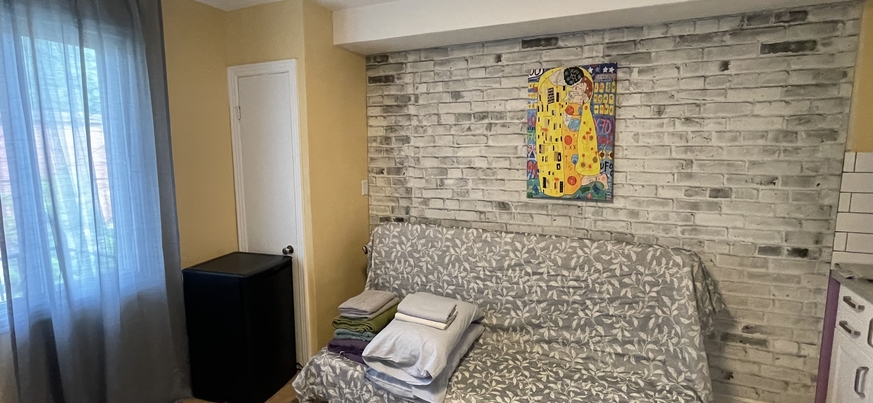
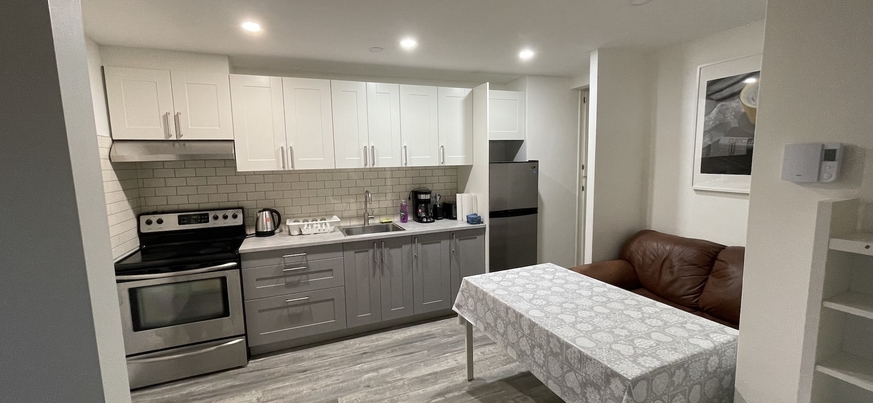
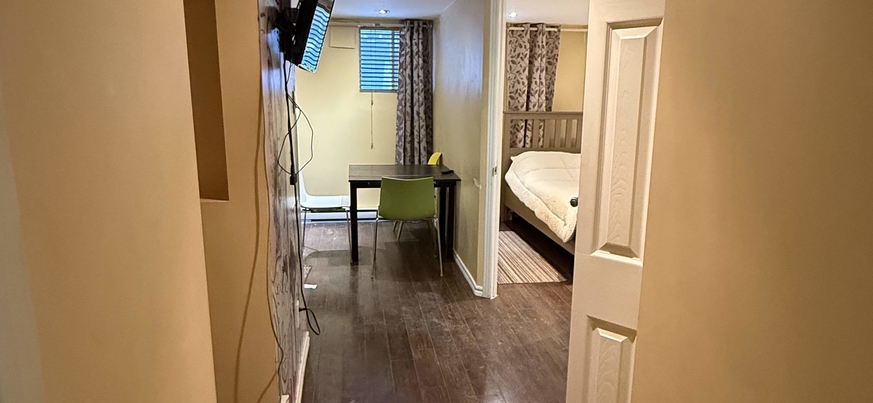
For most newcomers, the first months in Montréal are easier with a furnished apartment. You do not need to buy a bed, carry furniture, set up a full home, or commit too quickly to a long-term neighbourhood.
Montreal-Aparthotel helps people find furnished short- and mid-term apartments in Montréal. For someone renting a furnished apartment in Montreal without a Canadian credit history, this can be a practical first step while building local rental history, opening accounts, starting work, and learning the city.
For landlords, newcomers without Canadian credit history should not be dismissed automatically. A responsible tenant can show reliability through income, savings, employment, references, and clear communication.

Resources And Next Steps
Start with this timeline.
Before viewings:
-
open a Canadian bank account;
-
prepare one PDF application package;
-
request your credit reports;
-
collect references;
-
prepare proof of income or savings;
-
write a short cover letter.
During applications:
-
be clear about your Canadian credit history;
-
provide alternative proof;
-
ask what information the landlord needs;
-
confirm whether a credit check requires consent;
-
keep communication written.
After moving in:
-
pay rent on time;
-
keep receipts;
-
set up automatic reminders;
-
apply for a secured credit card;
-
consider rent reporting;
-
monitor your credit reports;
-
keep building Canadian credit.
FAQ
Can I rent an apartment in Montréal without Canadian credit history?
Yes. Renting a furnished apartment in Montreal without a Canadian credit history is possible, but you need a stronger application. Use proof of income, bank statements, references, employment verification, and clear communication.
What can I show instead of Canadian credit history?
You can show an employment letter, job offer, pay stubs, bank statements, proof of savings, previous landlord references, employer references, scholarship documents, or a guarantor.
Can a landlord ask for a security deposit in Quebec?
For a standard residential lease, Québec rules generally do not allow a landlord to require a security deposit, key deposit, or last month’s rent. The landlord may require the first month’s rent in advance.
Can a landlord run a credit check in Montréal?
Yes, but the landlord needs consent and should collect only the information needed for the rental application.
Can a landlord ask for my SIN in Québec?
A SIN is not necessary for a credit check in Québec. The Commission d’accès à l’information says a check can be done with minimal information such as name, address, and date of birth once consent is obtained.
What is a good credit score for renting in Canada?
Credit scores in Canada usually range from 300 to 900. Many landlords prefer around 650 or higher, and a good credit score is often considered about 660 or above, but each landlord may use different criteria.
Add new comment