
Most students who struggle with housing in Montreal don't make one big mistake. They make a series of small ones: searching too late, picking a neighborhood they've only read about, signing a lease without knowing Quebec's July 1 renewal cycle, or choosing the cheapest unit without factoring in what they're actually paying for. By the time these things compound, they've committed to twelve months somewhere that doesn't work for how they actually live.
Student apartments in Montreal remain more affordable than in Toronto or Vancouver — but the rental market here has its own logic, and understanding it before you start searching makes a real difference. Here's a practical, current picture of what the market looks like in 2026, how to choose the right neighbourhood for your situation, and what questions to ask before you sign anything.
What Montreal Student Apartments Actually Cost in 2026
The numbers that matter most are the ones nobody puts in brochures.
According to Zumper's March 2026 data, the median rent across all apartment types in Montreal sits around $1,875/month. But that's not what most students pay — because most students don't rent alone.
Shared off-campus housing in a typical student neighbourhood runs between $700 and $1,200 per person per month, depending on the area and how many roommates you're splitting with. That's the realistic range for someone sharing a 4½ or 5½ with two or three other people in Côte-des-Neiges, NDG, Rosemont, or Mile End.
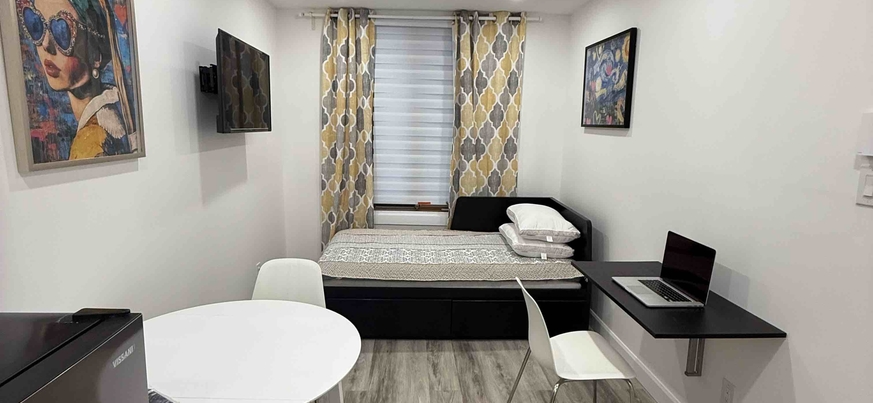
If you want your own studio or one-bedroom — more common among international students, graduate students, and those on professional placements — expect to pay $1,400–$1,800/month for a decent fully furnished unit in a central location, or $1,100–$1,500/month for an unfurnished one-bedroom in a slightly less central neighbourhood.
University residences at McGill and Concordia typically run $800–$1,600/month depending on the type of accommodation and whether meals are included. They fill up fast, priority goes to first-year and incoming international students, and they require a full-year commitment with strict cancellation terms — so they're not as flexible as they sound.
A few things that catch people off guard:
Quebec leases typically run July 1 to June 30. If you arrive in September, you may be signing a mid-year lease or looking at a sublet — both possible, both common, but worth knowing in advance. Also: utilities (electricity, heat) are often separate from rent in older Montreal buildings, especially the classic plexes you'll see in the Plateau and NDG. Always ask what's included.
The Best Neighbourhoods for Students in Montreal — and Who Each One Suits
Côte-des-Neiges (CDN) is home to Université de Montréal, HEC Montréal, and Polytechnique — and it's built for student life. Dense, diverse, and genuinely affordable, it's one of the city's most international neighbourhoods with over 120 nationalities represented. Rent runs lower here than on the Plateau, public transit is strong (Côte-des-Neiges and Université-de-Montréal metro stations), and shopping, grocery stores, and restaurants are all along the main arteries. CDN is the practical choice for anyone who wants proximity to campus without paying a premium for atmosphere.
NDG (Notre-Dame-de-Grâce) sits just west of CDN and has a quieter, more residential feel — brick houses, tree-lined streets, multicultural community, and good access to the 105 bus connecting to Vendôme metro. It's popular with graduate students, families, and people who want a bit more space and calm than the Plateau offers. Rents are reasonable and the area is genuinely liveable year-round.
Plateau-Mont-Royal and Mile End are where students go when they want to feel like they're in Montreal with a capital M — the spiral staircases, the café culture, the vibrant community of artists, musicians, and young professionals. Rent is higher here (one-bedrooms averaged around $1,880/month in 2025), and competition for units is real. But if your social and cultural life matters as much as your commute, this area delivers in a way the others don't. McGill and Concordia students particularly gravitate here — it's within walking distance of downtown campuses and well-served by metro (Mont-Royal and Laurier stations on the orange line).
Downtown Montreal (Ville-Marie) makes sense if your priority is zero commute and urban convenience — you're steps from McGill, Concordia, and UQAM, and Sainte-Catherine Street runs straight through it. The trade-off is that it skews more commercial than residential, and rent for a decent unit runs higher. That said, the area around the Guy-Concordia and McGill metro stations has a legitimate student presence.
Rosemont–La Petite-Patrie is the value neighbourhood people discover after deciding the Plateau is too expensive. It shares a lot of the Plateau's character — local restaurants, bike lanes, neighbourhood vibe — at a noticeably lower price point. It's a bit further from most university campuses, but the metro connection is solid.
The rule of thumb worth internalizing: picking a neighbourhood one metro stop beyond the most popular ones typically saves 15–25% on rent with minimal real impact on quality of life.

On-Campus Residence vs. Off-Campus Apartment: Which Actually Makes Sense
This depends heavily on where you are in your studies and how you're arriving in the city.
On-campus residence makes the most sense for first-year students who are arriving in Montreal for the first time and genuinely don't know the city yet. The community is built-in, the security is solid, the campus is next door, and you don't have to sort out utilities, Wi-Fi, or furniture. The cost is real — typically higher on a per-square-foot basis than off-campus housing — and the space is limited. Privacy is limited too; shared spaces and communal living are the norm.
Off-campus apartments offer more space, more independence, and usually better value for money — especially once you're past first year and know where you want to live. The downside is the full rental process: finding listings, dealing with landlords, signing a lease agreement, coordinating roommates, and sorting out everything that a university residence handles for you.
One scenario that doesn't get enough attention: arriving in Montreal before you've found a permanent place. Many international students land in the city weeks before September, or mid-semester, and need somewhere for a month or two while they figure out the neighbourhood, view apartments in person, and make a proper decision. A furnished monthly rental is the right structure here — no long-term commitment, fully furnished, everything included.
Montreal Aparthotel works specifically in this segment — fully furnished apartments rented by the month from 31 nights, with flexible terms, no long-term lease required, and a real person available seven days a week. For international students or anyone navigating a transition period, it removes the early pressure of committing to a year-long lease before you know the city. montreal-aparthotel.com · +1 438-838-8833 · info@montreal-aparthotel.com
How to Find Student Housing in Montreal — and What to Watch Out For
The main platforms students use: Kijiji, Facebook Marketplace, Facebook groups specifically for Montreal student housing (there are dozens organized by university and neighbourhood), Craigslist (still active for Montreal), and institutional listings boards at McGill, Concordia, Université de Montréal, and UQAM.
A few things worth knowing before you start:
Don't sign a lease you haven't seen in person, and don't transfer money before signing. Montreal has a documented scam problem around fake rental ads — particularly in the summer months when student housing demand peaks. If a landlord asks for a deposit or advance rent before you've visited the unit and signed a formal lease, stop. Under Quebec law, a landlord cannot legally require a deposit before lease signing. This rule exists for your protection.
Understand what's included before you compare prices. An affordable $950/month listing that doesn't include heat, electricity, or internet might cost more than a $1,150 one that includes all three. Always ask for the total monthly cost, not just the rent.
Visit the building before you commit. Photos can misrepresent condition, bathroom size, natural light, noise level, and the real location relative to the nearest metro station. If you're arriving from abroad and genuinely can't visit before your arrival date, use a furnished monthly rental as your initial base while you search in person.
The July 1 lease cycle matters. Most Montreal leases start July 1. If you're searching in April or May for September, you may find things that look empty but won't be available until July — and then are subject to the standard twelve-month lease. Understand the timeline before you make offers.
Budget beyond rent. The typical monthly budget for a student in Montreal who is sharing an apartment and cooking most meals runs $1,400–$1,700/month excluding tuition. A student renting a solo studio or one-bedroom centrally should budget $2,200–$2,500. The biggest variable, almost always, is housing.
Montreal is genuinely one of the more manageable cities in Canada for student budgets — but only if you know how the market works before you start.
Add new comment