

Most students can rent an apartment in Montreal without a guarantor or co-signer, though landlords frequently ask for one when a student has little credit history, no steady income, no rental track record, or has just arrived in Canada.
It's a common situation for students specifically. A landlord's main concern is whether the rent will actually get paid if the tenant loses a job, goes without income over the school year, or falls behind. A guarantor or co-signer gives the landlord someone else to turn to if that happens.
That doesn't mean landlords can ask for whatever they want, though. Quebec has its own rental rules, and rental advice written for Ontario, British Columbia, or the U.S. often doesn't apply here.
Student Renting in Montreal, Briefly
Student housing in Montreal generally splits into two categories: university residences and private rentals.
University housing tends to be more structured, with its own application process, deadlines, residence rules, and student support services. A credit check usually isn't the deciding factor for residence-style housing.
Private rentals work differently. You're dealing with an owner, landlord, property manager, or rental company, and they'll often want proof you can cover the rent — income, savings, a guarantor, references, or a credit report.
Landlords commonly ask students for:
-
proof of enrollment
-
photo ID
-
proof of income or savings
-
bank statements
-
references
-
consent for a credit check
-
a guarantor or co-signer
-
first month's rent, paid at the right time
-
tenant insurance, depending on the lease
Under Quebec law, a lease is simply a contract between landlord and tenant, and the Government of Quebec describes it as the document that sets out what each side owes the other regarding the dwelling.
Credit History: What Montreal Landlords Actually Look At
Students typically have thin credit files — the file exists, but there isn't enough payment history behind it to say much. International students often have no Canadian credit history at all.
A landlord's credit check can surface credit accounts, payment patterns, debts, late payments, collections, and an overall risk picture. The trouble is that most students simply haven't had time to build much of a Canadian credit record yet.
That thinness can work against a rental application. Landlords are generally trying to avoid risk, and a file with no credit score, no steady income, and no rental history often triggers a guarantor request.
Before you start applying, pull your Canadian credit reports if you have a file — Equifax and TransUnion both offer them. Even an empty report is worth having, since it lets you tell the landlord plainly that you're a student with limited Canadian credit history rather than leaving them to guess.
A few ways to start building credit locally:
-
open a Canadian bank account
-
use a secured credit card carefully
-
pay bills on time
-
keep your rent receipts
-
avoid opening several new accounts at once
-
check your credit reports for errors
A credit score helps, but it's rarely the whole picture. Savings, references, and a clear plan for paying rent carry real weight too.
Co-Signer and Guarantor Options for Students
A co-signer signs the lease alongside you and shares legal responsibility for the rent. If you can't pay, the landlord may be able to go after the co-signer for the unpaid amount, depending on what was agreed.
A guarantor works similarly but usually doesn't live in the apartment — they simply promise to cover the rent or other obligations if the tenant doesn't. Guaranteeing a lease doesn't give someone any automatic right to occupy the unit.
Listings often blur these terms together — apartment cosigner guarantor, apartment rent guarantor, guarantor for renting an apartment — but the actual responsibility comes down to what's written in the document. Read it carefully before anyone signs.
People who typically qualify as a guarantor or co-signer include:
-
a parent
-
another family member
-
a close relative
-
a trusted adult with stable income
-
occasionally a close friend
-
occasionally an employer-backed arrangement
-
a third-party guarantor company, for a fee
Montreal landlords tend to prefer a guarantor based in Quebec or Canada with stable income and solid credit. Some will turn down a guarantor living outside the country simply because verifying income or enforcing the agreement gets harder across borders.
Third-party guarantor companies exist and can act as financial backers, but they charge for it. Most students treat them as a fallback rather than a first choice.
Proof of Income and Rent Affordability
Full-time income isn't a given for students, which is exactly why affordability gets assessed differently.
Landlords look at whether the rent makes sense against your income, savings, family support, scholarships, or loans. A rough industry benchmark puts comfortable rent at 30–35% of gross monthly income, though student applications often get judged with more flexibility since family support or savings frequently fill the gap.
A simple way to check your own numbers:
Monthly income or available support ÷ monthly rent = affordability strength
If rent is $900 and you have $2,700 a month available between work, savings, and family support, you're putting about a third of your monthly resources toward rent — a reasonable ratio for most landlords.
Documents that help prove income or savings:
-
employment letter
-
pay stubs
-
scholarship letter
-
student funding letter
-
bank statements
-
proof of savings
-
letter from parents confirming support
-
guarantor's proof of income
-
proof of student loan funding
-
reference letter from an employer
Proof of savings can go a long way with landlords, particularly for students without a steady paycheque — it won't replace every other document, but it demonstrates you can cover rent for a few months if needed.
Security Deposits and First Month's Rent in Quebec
This part matters more than it might seem.
Some general rental advice online suggests offering a bigger deposit to strengthen an application. That might work elsewhere, but it's not how things work in Quebec, and following it could actually cost you money you're not obligated to pay.
Quebec landlords cannot require a security deposit, key deposit, cleaning deposit, damage deposit, furniture deposit, or any other extra charge. The Tribunal administratif du logement is explicit that a landlord cannot demand rent in advance beyond the first payment period, capped at one month. HEC Montréal gives students the same warning directly: landlords may not require any deposit beyond that first month's rent.
So can a Quebec landlord ask for a security deposit? For a standard residential lease, no.
A landlord is entitled to the first month's rent at signing or move-in, depending on how the lease is structured, but nothing beyond that can be made a condition of renting the apartment.
Legitimate ways to strengthen an application without extra deposits:
-
stronger references
-
proof of savings
-
a guarantor agreement
-
a co-signer
-
a clear rental resume
-
tenant insurance
-
a written inventory for furnished units
-
proof of enrollment
-
proof of income
-
straightforward communication with the landlord
If someone asks for last month's rent, a damage deposit, or a "furniture deposit," pause before paying anything. Get the request in writing and check it against Quebec's rules first.
No Guarantor? Here's What Actually Works
Plenty of students don't have a parent, relative, or local contact who can co-sign — international students and newcomers run into this constantly.
A few practical routes if that's your situation:
Apply with a reliable roommate. If one of you has stronger income, rental history, or a local guarantor, the whole application looks steadier to a landlord. Just make sure everyone understands what they're responsible for before signing.
Show recent bank statements. A few months of rent covered in savings can go a long way — you don't need to lay out your entire financial situation, just enough to show stability.
Consider shared accommodation. Renting a room in a shared apartment often comes with fewer formal requirements than signing a full lease solo.
Reach out to your university's housing office. Most schools have housing resources, off-campus listings, student boards, or even emergency accommodation contacts.
Look at temporary accommodation first. A furnished room or short-term apartment buys you time to build credit, find roommates, get to know neighbourhoods, and put together a stronger application later.
Try individual owners rather than large property managers. Smaller landlords sometimes have fewer formal requirements, especially when your documents are clear and communication is good.
Use a third-party guarantor service only if the cost genuinely makes sense. Read the fees, the responsibilities, and the cancellation terms closely before committing.
Putting Together a Strong Application
A good student application is organized and easy for a landlord to skim — not ten separate files with unclear names.
One PDF, if you can manage it, should include:
-
a short cover note
-
a rental resume
-
proof of enrollment
-
photo ID
-
proof of income or savings
-
references
-
a credit report, if you have one
-
a guarantor form, if applicable
-
a tenant insurance quote, if requested
A rental resume can cover:
-
your name
-
school or program
-
expected lease dates
-
number of occupants
-
whether you have pets
-
monthly budget
-
income or funding source
-
references
-
guarantor information, if you have one
Keep the cover note simple:
"Hello, I'm a student at [school] looking for a lease starting [date]. My budget is [amount]. I can provide proof of enrollment, bank statements, references, and a guarantor if needed."
Offering to pay first month's rent up front is fine when it's legal and appropriate — just don't offer illegal deposits, and don't promise money simply to win the apartment over other applicants.
What a landlord is really trying to see is whether you're responsible, organized, and able to pay. Make that easy for them to spot.
Your Rights and Tenant Resources in Quebec
Quebec law doesn't require every student to have a guarantor. A landlord can ask for proof you can pay, and may request a guarantor if your application looks thin, but it's not a universal legal requirement.
Landlords can check your ability to pay, but they have to respect your privacy while doing it. The Commission d'accès à l'information du Québec requires landlords to get consent before running a credit check, and notes that a Social Insurance Number isn't necessary for one — name, address, and date of birth are usually enough.
A guarantee also doesn't necessarily follow you forever. Under Quebec rules, a third party's guarantee for a tenant's obligations doesn't automatically carry over to a renewed lease unless the parties agreed otherwise — worth knowing if you're signing a one-year lease that might renew.
Useful resources if you need them:
-
Tribunal administratif du logement
-
your university's housing office
-
a student legal clinic, where available
-
local tenant support organizations
-
legal aid, if you qualify
-
official Quebec housing pages
If a landlord asks for something that feels off, get advice before you sign or pay anything.
Documents Checklist for Student Applicants
Worth gathering before you start apartment-hunting:
-
photo ID
-
proof of study enrollment
-
admission letter or student card
-
recent bank statements
-
proof of savings
-
proof of income, if you work
-
employment letter, if available
-
scholarship or funding letter
-
references from employers or past landlords
-
Canadian credit report, if available
-
tenant background report, if you choose to provide one
-
guarantor form, if applicable
-
guarantor's proof of income, if requested
-
guarantor's contact information
-
tenant insurance quote or proof, if needed
-
short rental resume
International students should also have their study permit or other relevant immigration documents on hand, sharing only what's actually reasonable for a rental application.

Final Thoughts
So do you need a guarantor or co-signer to rent in Montreal as a student? Sometimes — not always.
You're more likely to need one without a credit history, steady income, rental history, or Canadian residency behind you. You're less likely to need one with enough savings, strong references, a solid credit report, stable income, or a reliable roommate on the lease with you.
Rather than pushing back on every landlord, come prepared: build a clean application, show real proof, know Quebec's deposit rules cold, and never offer illegal payments just to secure a place. If you have a guarantor, get the agreement in writing and make it clear. If you don't, lean on savings, references, roommates, university support, or temporary housing while you build up a stronger file.
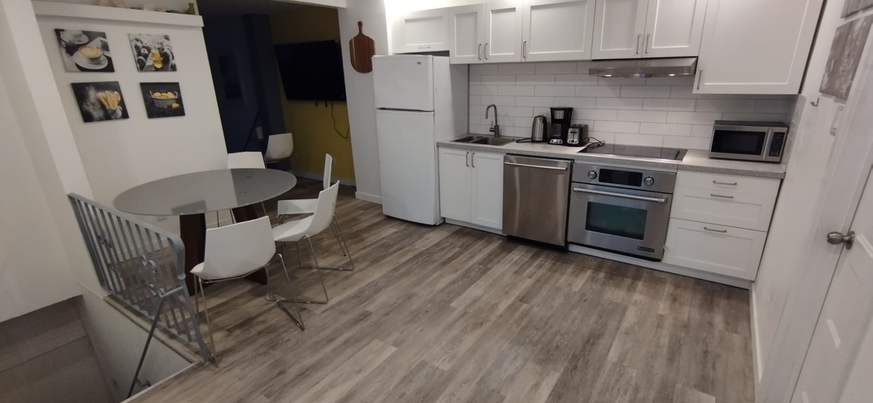
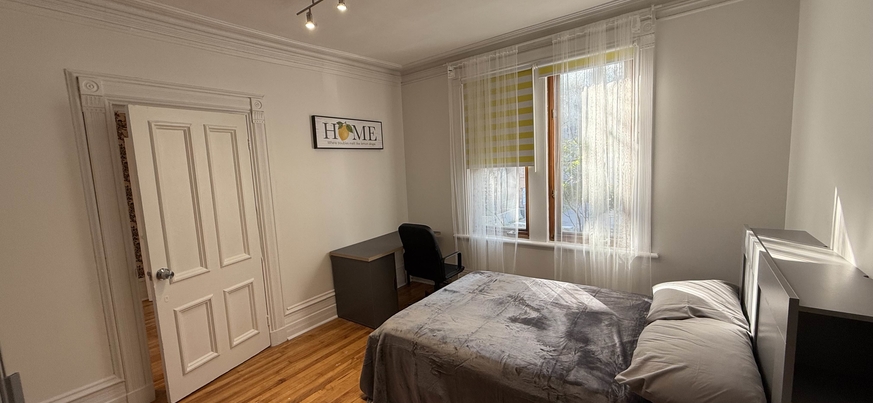
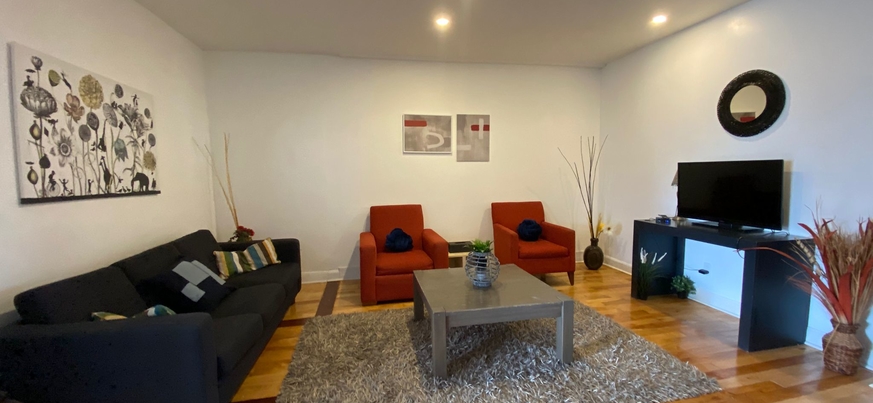
If you're still hunting for somewhere to stay in Montreal, Montreal-Aparthotel can help you compare furnished apartments for short- and mid-term stays — a solid option for students who are new to the city, still building credit, or not ready to commit to an unfurnished long-term lease right away.
Browse furnished apartments in Montreal here: https://montreal-aparthotel.com/eng/apartments/student-apartments
A good student tenant isn't defined by a credit score alone. Landlords want confidence that rent will be paid and the apartment respected — your job is to make that easy to see.
FAQ
Do you need a guarantor to rent an apartment in Montreal as a student?
Not always. Plenty of students rent without one, but landlords may ask for a guarantor if your credit history, income, rental history, or local references are limited.
What is a guarantor for an apartment rental?
Someone who promises to cover rent or lease obligations if the tenant can't. Guarantors usually don't live in the apartment themselves.
What's the difference between a co-signer and a guarantor?
A co-signer signs the lease directly and shares responsibility under it. A guarantor typically signs a separate guarantee and only becomes responsible if the tenant defaults.
Can a landlord require a guarantor in Quebec?
They can ask for financial proof and request a guarantor if an application looks weak, but Quebec law doesn't make guarantors mandatory for every student.
Can a landlord ask for a security deposit in Quebec?
For a standard residential lease, no. Landlords can't require a security deposit, damage deposit, key deposit, or last month's rent — only the first month's rent in advance.
What if I'm a newcomer without any credit history?
Show a few months of savings, proof of enrollment, bank statements, references, and any income or family support you have. A local co-signer helps if you can arrange one.
What if I'm an international student with no local co-signer?
Talk to your university's housing office, look into temporary or shared housing, and put together a strong proof-of-funds package. A third-party guarantor service can work as a fallback — just check the fees carefully.
What if I'm a low-income student looking for private housing?
Consider applying with a roommate, renting a room instead of a full apartment, looking at lower-rent neighbourhoods, and checking university or community housing resources.
Can my parent be my guarantor?
Yes, as long as the landlord accepts them and they can show enough income and credit strength. Landlords often prefer guarantors based in Quebec or Canada.
Does a guarantor stay responsible after the lease renews?
Not automatically in Quebec, unless the agreement specifically says the guarantee continues past renewal. Get that in writing before anyone signs.
Add new comment